
Providence Technology Group


Tech Challenges Complicate California’s COVID-19 Response
(TNS) — Before he became California governor last year, Gavin Newsom built his reputation as a tech-savvy Bay Area politician, who wrote a book arguing government should follow Silicon Valley’s lead and embrace new technology. But five months into the biggest crisis of his governorship, technology problems have become major stumbling blocks to his coronavirus strategy. The state’s unemployment system has been mired in delays, leaving thousands of people desperate for aid checks in limbo. California’s health insurance program for low-income residents has dropped coverage for thousands of people due to computer errors. And last week state officials announced they had vastly undercounted coronavirus case data due to a series of human mistakes and IT glitches. None of the problems have easy fi...[Read More]


Landmark Agreement Unites Parties in Boosting Commercial Space Operations in California
VANDENBERG AIR FORCE BASE, Calif., Aug. 5, 2020 /PRNewswire/ — Leaders from the State of California, REACH, the 30th Space Wing, Cal Poly State University and Deloitte today announced a commitment to develop a thriving spaceport at Vandenberg Air Force Base and the surrounding area. According to the memorandum of understanding, the parties will develop a master plan that identifies the required infrastructure, human capital development, governance and financing necessary to support the United States Space Force mission and position California as a global leader in the future of the commercial space industry. Chris Dombrowski, Acting Director of GO-Biz, said: “California has been at the forefront of the aerospace industry for more than a century. This MOU cements that leadership...[Read More]


SkySlope Launches a Next-Generation Forms Product in Arizona to Enhance the Agent Experience
SkySlope, the leader in real estate transaction and brokerage software, has launched SkySlope Forms — the most innovative form product to come into the market. SkySlope Forms, which is being rolled out to Arizona customers, uses state-of-the-art technology to create a seamless user experience by giving agents and TCs a streamlined and efficient way to execute real estate transactions. With a frictionless transition between transaction management, paperwork, and digital signature, SkySlope Forms helps agents and TCs save time and improves compliance for brokers. SkySlope’s comprehensive platform for brokers, agents, auditors, and transaction coordinators enables real estate professionals to centralize their work while remaining compliant. As the transaction management platform that se...[Read More]

Data Privacy Challenges for California COVID-19 Contact Tracing Technology
As opt-in contact-tracing applications across the US are being built for state-specific usage, attention inevitably turns to the privacy risks they present, and how authorities must balance public health with cybersecurity to build systems that are fully fit for purpose.In the battle to control COVID-19, the fundamental role of contact-tracing applications is to alert people when they’ve come into contact with someone who has tested positive for the virus. They have been touted as a vital tool in identifying localized spikes in infections and helping authorities to quickly isolate anyone who may be at risk of spreading the virus further. Keep reading this article at darkreading.com.


UC Davis, Caltrans Partner to Prevent Wrong-Way Driver Crashes
Caltrans and the UC Davis Advanced Highway Maintenance and Construction Technology Research Center, or AHMCT, today (July 13) released two reports highlighting ways to prevent rare but often deadly collisions involving wrong-way drivers. One of the prevention measures included in the three-year pilot program — reflectors that alert drivers they are entering the roadway in the wrong direction — proved to be so effective that Caltrans has already installed the reflective markers on hundreds of miles of highways. “Adding the two-way reflective markers proved to be so effective that Caltrans updated its statewide design standards,” said Caltrans Director Toks Omishakin. “It’s a low-cost measure we can use throughout the state to deter wrong way drivers and potentially save lives on California’...[Read More]


California Police, Amazon Ring Partnerships Raise Concerns
As nationwide protests force a deep examination of police tactics and funding, technology companies say they are re-evaluating their relationship with law enforcement as well. Amazon has halted police use of its facial recognition technology for one year and the website Nextdoor has stopped forwarding tips to police. Now, privacy groups and activists are scrutinizing the relationships between Amazon and local police departments that allow law enforcement to request access to video recordings from doorbell cameras installed in private homes. Amazon’s expanding network of law enforcement “partners” for its Neighbors app remains intact, an arrangement that critics say is designed to boost sales of its Ring cameras and capitalize on fears of property crime. Social media and news channels are f...[Read More]


Microsoft unveils sweeping job training initiative to teach digital skills to 25M impacted by pandemic
Microsoft plans to provide digital skills training for 25 million people this year under a new, multi-million dollar initiative that will bring together multiple branches of the company, including LinkedIn and GitHub. Microsoft CEO Satya Nadella and President Brad Smith announced the initiative Tuesday and stressed the urgency of training workers for the jobs of the future at a time of severe economic distress. The U.S. unemployment rate has surged past 14% with more than 20 million Americans out of work since the outset of the pandemic. “Talent is everywhere but the opportunity is not,” Nadella said during the virtual event. “Over and over again, we see that when people have access to education and skilling they create new opportunities for themselves and other people.” Keep reading this ...[Read More]

California, Massachusetts Rank as Most Innovative States
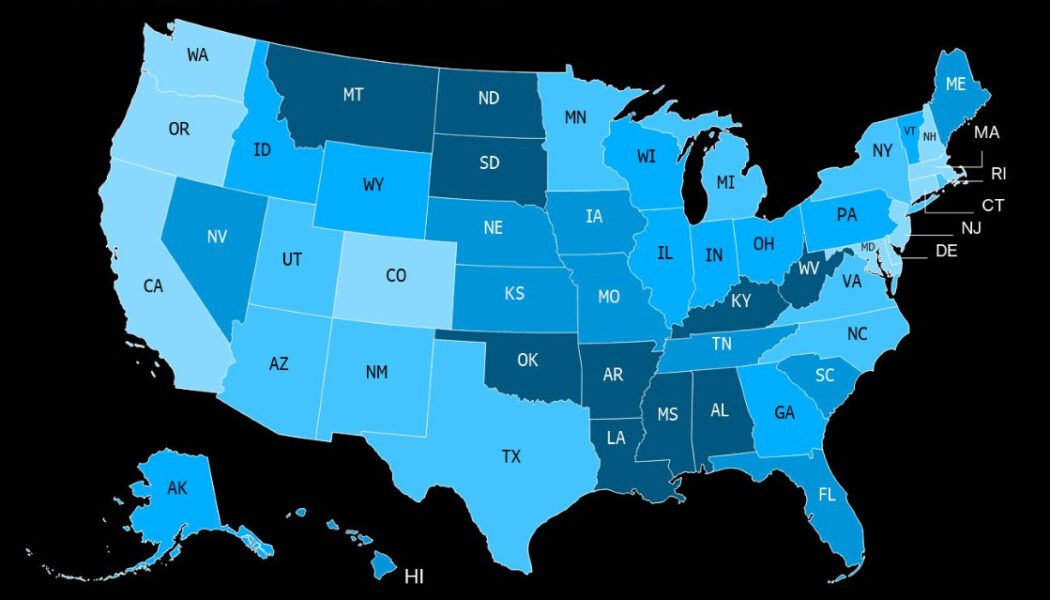
America’s top two most-innovative states share similar paths to success. For the second consecutive year, California and Massachusetts took the first and second spots in Bloomberg’s annual State Innovation Index. The ranking is based on six equally weighted metrics: research and development intensity, productivity, clusters of companies in technology, STEM jobs, residents with degrees in science and engineering disciplines and patent activity. California and Massachusetts’ success dates back more than 150 years ago with the creation of land-grant universities under the Morrill Act, according to New York University Stern School of Business economist Paul Romer. The Morrill Act of 1862 helped boost higher education in America by granting states public land they could sell and then use the pr...[Read More]


How To Scale A Telehealth Strategy: Pilots, Providers, and Payment
The new Blue Shield of California initiative is for Blue Shield of California members. A previous version of this article said the initiative served Blue Cross Blue Shield members. Payers looking to scale up their telehealth strategies face numerous hurdles, shared Peter Long, senior vice president of Blue Shield of California (BSC). And he should know. Long is at the head of a sprawling initiative called Health Reimagined that seeks to bring personalized, integrated, digitally-supported care to Blue Shield of California members—and in some cases non-members—in California. Keep reading this article at Health Payer Intelligence

Unearthing Innovation in the Food & Agriculture Industries
One of Greater Sacramento’s booming industries is food and agriculture. As a young professional, I have stepped into the world of these industries, working for their economic growth which is something I didn’t originally see in my future. I was born in China where I was exposed to the life of farming and agriculture through my father’s family, who had a microfarm composed of vegetables they would consume daily, like tomatoes, squash, cucumbers, green beans and more. At the age of seven, we moved to Southern California and the idea of entering into a career in agriculture was not on my radar. There were always the unattractive perceptions of working in the dirt – that it is strenuous and not lucrative. I realized I wanted to invest my career in these industries after being exposed to their ...[Read More]


Steven Belmont Explains How Technology is Revolutionizing the Real Estate Investment World
“There’s an app for that!” is something we can say for nearly anything nowadays. No taxis in sight? Use Uber. Hotels fully booked? Check out Airbnb. Working remotely during COVID-19? Call up your coworkers with Zoom. These apps, along with many others, have optimized the way we live and work, by providing us with accessible solutions that are cost-effective on both time and money. Every industry is influenced by smartphone apps and other forms of modern technology, including the world of real estate investment. To effectively communicate with today’s tech-savvy homebuyers, it’s important that investors remain on top of these fast-evolving trends and learn how these new technologies can be of benefit. Keep reading this article at TMCNet.com


Virtual camp set to help faculty train for online teaching
Members of Sacramento State’s faculty are packing their virtual suitcases for a summer camp experience meant to further prepare them for fall classes that are scheduled to be taught online because of COVID-19 considerations. The University has committed $1 million in federal funding to Teach ON!-line Summer Camp, a new program led by the Center for Teaching & Learning (CTL) and created in partnership with Information Resources & Technology (IRT) and the College for Continuing Education (CCE). The funding comes from Sac State’s Coronavirus Aid, Relief, and Security (CARES) Act allotment and will allow for as many as 800 faculty to attend a three-week-long session. Nearly 500 tenured and probationary faculty and lecturers have signed up so far. Each faculty participant who completes ...[Read More]