
Providence Technology Group


California high-speed track and overhead line design contract awarded
THE California High-Speed Rail Authority (CHSRA) has awarded a joint venture of Systra and Typsa a $US 131.2m contract to design track and the overhead line electrification (OHLE) system for the first section of the state’s planned high-speed network. The joint venture will produce high-level designs for track and OHLE on the 273.6km section from Merced to Bakersfield, and detailed designs for the 190.4km currently under construction. This will include trackside cable runs, ducts beneath the track, access walkways, fencing and drainage. Keep Reading This Article at the International Rail Journal


San Jose spearheads nationwide coalition to develop artificial intelligence safety policies
WHILE SAN JOSE is getting cozy with artificial intelligence, the city is preparing safety nets for its own partnerships. The city published a set of employee guidelines on AI last July. Now, it’s nearly done with an AI policy with requirements for companies that work with San Jose. This policy was created in tandem with the Government AI Coalition — a collective of public agencies nationwide that work together to flesh out policies to help use AI responsibly. Keep Reading This Article at MSN.com


Folsom-based PowerSchool to be acquired by private equity firm Bain Capital for $5.6 billion
PowerSchool, the powerhouse educational software company based in Folsom, has agreed to be acquired by Bain Capital in a deal worth $5.6 billion, the companies announced Friday. The purchase will earn shareholders of the capital region’s largest publicly-traded company $22.80 a share when the deal closes later this year. Bain executives said in a joint announcement that PowerSchool provides “significant opportunities to expand” amid a surge of cloud-based and so-called software-as-a-service K-12 educational technology. The company already provides service to 17,000 schools and other educational institutions with access to 55 million students across 90 countries. Keep Reading This Article at MSN.com


What AI policymakers need to be thinking about in California and beyond
As California considers policies and regulations around artificial intelligence, the conversation should center on its effects on people, experts and policymakers agree. The state has gotten started: It released guidelines for state use of AI earlier this year. Amy Tong, secretary of the state’s Government Operations Agency, was tasked with assessing the effect of generative AI on vulnerable communities; its effect on workforce development for existing and future workforces; and recommending state procurement guidelines. “(Talking about AI) shouldn’t be tech-driven,” Tong, who’s the former director of the state’s Technology Department, said on a panel at the CalMatters Ideas Festival in Sacramento on Wednesday, which was moderated by CalMatters reporter Khari Johnson. “People should be at ...[Read More]


How California and the EU work together to regulate artificial intelligence
While the federal government appears content to sit back and wait, more than 40 U.S. states are considering hundreds of AI regulation bills. California, with its status as a tech-forward state and huge economy, has a chance to lead the way. So much so, in fact, that the European Union is trying to coordinate with the state on AI laws. The EU opened an office in San Francisco in 2022 and dispatched a tech envoy, Gerard de Graaf, to better communicate about laws and regulations around AI. We are living through what de Graaf calls “the year of AI.” De Graaf and deputy head of the EU office in San Francisco Joanna Smolinska told CalMatters that if California lawmakers pass AI regulation in the coming months, the state can emerge as a standard bearer for the regulation of AI in the United State...[Read More]


Shadow IT surge threatens corporate data: report
Dive Brief: The volume of corporate data placed into artificial intelligence tools by workers skyrocketed 485% from March 2023 to March 2024, exposing businesses to heightened risks, according to a report released Tuesday by cybersecurity company Cyberhaven. Workers are putting company data into personal “shadow AI” accounts that, unlike enterprise versions, potentially expose whatever is shared with them to the public, according to the research. “AI usage at work is increasing at an exponential rate and so is the amount of corporate data pasted or uploaded to AI tools,” the report said. Keep Reading This Article at the CFO Dive


California to tap generative AI tools to increase services access, reduce traffic jams
California could soon deploy generative artificial intelligence tools to help reduce traffic jams, make roads safer and provide tax guidance, among other things, under new agreements announced Thursday as part of Gov. Gavin Newsom’s efforts to harness the power of new technologies for public services. The state is partnering with five companies to create generative AI tools using technologies developed by tech giants such as Microsoft-backed OpenAI and Google- and Amazon-backed Anthropic that would ultimately help the state provide better services to the public, administration officials said. “It is a very good sign that a lot of these companies are putting their focus on using GenAI for governmental service delivery,” said Amy Tong, secretary of government operations for California....[Read More]
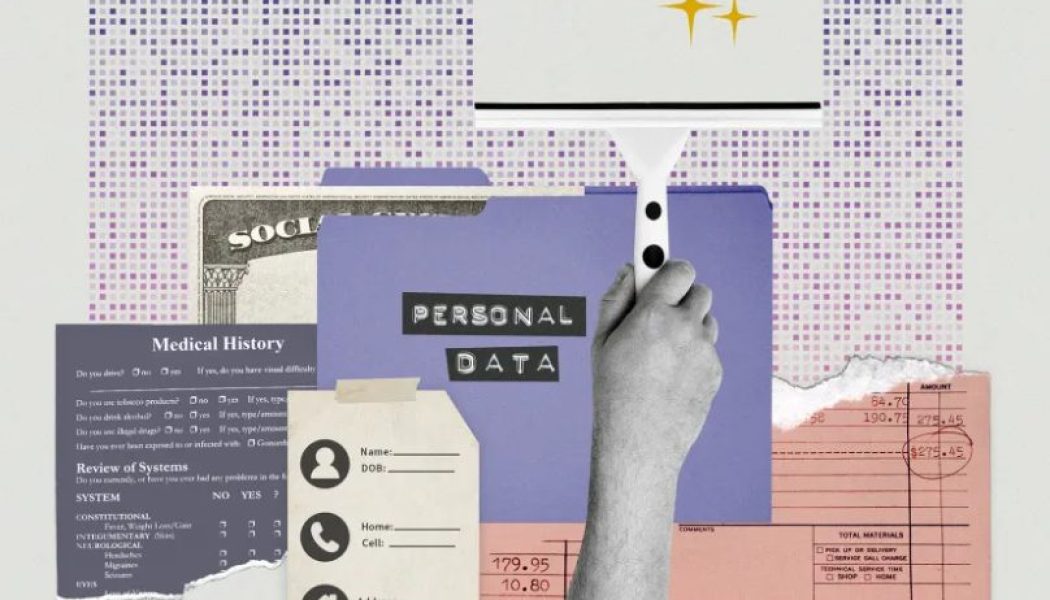

Who’s selling your digital data? California gives you tools to protect your online privacy
If you visited a Planned Parenthood in the continental United States in the past few years then the company Near Intelligence, a data broker, probably knew it — and may have sold that information to anti-abortion activists. If you attended certain houses of worship or patronized particular pharmacies, the data broker known as Outlogic allegedly sold that information. Near Intelligence filed for bankruptcy in December. Outlogic agreed to a settlement with the Federal Trade Commision to stop selling user location data, while insisting regulators had found “no misuse of any data.” Both were among nearly 90 companies on the latest version of the California data broker registry that self-reported selling data about where people are or have been. For the first time this year California requires ...[Read More]

UC Davis Health Cloud Innovation Center, powered by AWS, uses generative AI to fight health misinformation
Former National Institute of Allergy and Infectious Diseases (NIAID) Director Anthony Fauci called health misinformation “the enemy of pandemic control.” Around the US, public health officials are grappling with how to keep their communities safe from the potentially deadly effects of medical misinformation, disinformation, and malinformation. Misinformation is false or inaccurate information spread in error, regardless of intent. Disinformation is misinformation that is knowingly or intentionally spread by bad actors. Malinformation is information based on fact but purposely taken out of context to mislead others. Keep Reading This Article at the AWS Blogs


CalMatters’ Digital Democracy fuses journalism, AI and data to supercharge legislative transparency for California
CalMatters’ Digital Democracy is a powerful new way for Californians to understand and participate in their state government. Digital Democracy is: A searchable database where anyone can access information to better understand issues. A website that brings state government to life for the public. A smart AI tool that searches the data and generates news tips for journalists. “As a journalist who has been watching the California state government for nearly 30 years, it’s clear to me that the politicians and the decision-making process have become more opaque,” says David Lesher, CalMatters co-founder and senior editor, who’s leading the Digital Democracy initiative. “The transparency created by Digital Democracy is about how the people we elect are weighing the special interests and the pub...[Read More]


‘Digitizing is the future’: California’s water rights system needs to be brought into the 21st century
In the Records Room of the CalEPA building in Sacramento are some of the most important documents in the entire state of California. Some date back to 1914. “Our files are organized in ascending order,” explained Matthew Jay, an analyst with the State Water Resources Control Board. “The oldest documents are at the bottom and so you can see that some of the stuff is all typewritten and in a lot of cases, handwritten.” The papers are what’s known as water rights – the backbone of life in California and its multitrillion dollar economy. Water rights are official documents validating who has the authority to take water, from where, and how much of it. Keep Reading This Article at the abc10.com


CDFW introduces license application for mobile devices
The California Department of Fish and Wildlife (CDFW) recently announced the launch of the CDFW License App for mobile devices. The new application allows residents and nonresidents to display California sport fishing licenses and validations on their mobile phones and other mobile devices in lieu of a physical license. Users may also download and view various CDFW online resources, including hunting and fishing regulations booklets, the Fish Planting Schedule and access the Online License Sales and Services website. Keep Reading This Article at the Escalon Times