
Providence Technology Group

If California government wants to use AI, it will have to follow these new rules
As artificial intelligence technology advances, state agencies would like to make use of it. California as of today is one of the first states with formal rules for government departments to follow when buying AI tools. The guidelines introduced this week are the product of an executive order aimed at challenges and opportunities from generative AI by Governor Gavin Newsom late last year. Generative AI produces text, imagery, audio, or video from simple text prompts. Since the release of ChatGPT in fall 2022, the technology has triggered fear of job loss, election inference, and human extinction. The technology can also produce toxic text and imagery that amplifies stereotypes and enables discrimination. Keep Reading This Article at CalMatters


Women in Leadership: Carmen Marsh
Carmen Marsh can say something with confidence that many can’t: She always enjoys her jobs. Twenty-five years ago, she found her passion for technology and has stuck with the profession ever since. She now ensures other women have a chance to discover this passion as the president and CEO of United Cyber Security Alliance, a Roseville-based nonprofit she founded in 2020 that provides a platform for women to learn and advance in cybersecurity. Originally from Sweden, Marsh is also the CEO and managing partner of Inteligenca, a cybersecurity risk management consulting company she co-founded with Paula Dube in 2017. Inteligenca serves small businesses that lack the big budgets to buy expensive software or the in-house staff to maintain security safeguards. “Paula and I understood that there’s...[Read More]
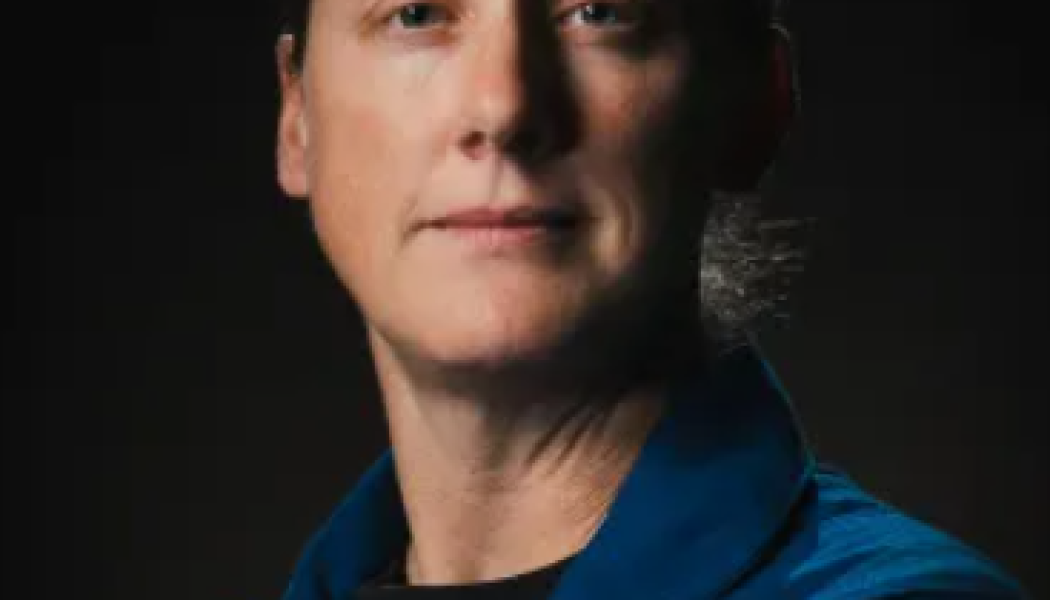

One of NASA’s newest astronauts is a pilot from California. Will she make it to the moon?
Jessica Wittner is getting some deserved time off — just a day or so to decompress with family before jumping back into the work of being one of NASA’s newest astronauts. “I’m filled with excitement and energy right now,” Wittner told The Bee in a phone interview Tuesday, following a graduation ceremony at Johnson Space Center in Houston. This is the dream scenario for the Clovis native and Buchanan High School graduate. She was 12 when she first verbalized wanting to be an astronaut. She joined the U.S. Navy after graduation and became an aviation mechanic. She earned a Bachelor of Science in Aerospace Engineering from the University of Arizona and a master’s degree from the U.S. Naval Postgraduate School. Keep Reading This Article at MSN.com


Some Hydrogen Car Owners Are Still Waiting for the Future to Arrive
Debra Snell thought she did her research. Before she and her husband signed the paperwork on their new red Toyota Mirai last March, they went to a hydrogen fueling station near their home in Grass Valley, California, northeast of Sacramento. There, on two consecutive weekends, they interviewed members of a small but proud group: drivers who, attracted to environmental benefits, low price tags, and automaker and state incentives, took a chance on the first hydrogen fuel-cell electric vehicles (FCEVs). “We got mostly very good reviews,” Snell says. After years of promises, drivers and salespeople told her, hydrogen fueling was really coming together. The Snells, who are retired, care about the environment. When they bought the hydrogen fuel-cell car, “we felt like it was a really pioneering ...[Read More]


Accelerating The Exchange Of Health And Human Services Data To Improve Outcomes And Disrupt Inequities
The exchange of health information is at the core of national efforts to transform our health care delivery system to generate value for patients. Over the last few years, the federal government, alongside many states, has worked to enable not only the exchange of data, but also the practical use of the data to improve outcomes and disrupt the deep inequities in our health care system. These disparities in outcomes were further exposed during the COVID-19 pandemic and in many communities fueled the spread of the virus. As we look to build back better from the pandemic, and as we drive greater connections between disparate systems—health care, public health, and social services— we have a unique opportunity to leverage the power of health information exchange to improve how we work together...[Read More]


Samsung Semiconductor Opens New Folsom Location
Samsung Semiconductor has announced the opening of its newest office in Folsom. The news of the tech giant planting roots in the city came Thursday afternoon as Folsom Mayor Mike Koslowski closed his 2024 State of the City speech to a sold out crowd at Lakeside Church. “We’re excited to announce that Samsung Semiconductor is opening a brand new office, right here in Folsom,” said Koslowski. “This strategic move strengthens Folsom’s position as a city of choice for businesses and allows the city to harness local talent, fueling innovation in the semiconductor industry.” Koslowski shared that the facility will, “contain an research and development (R&D) hub like no other,” featuring an Advanced Compute Lab and an Advanced Controller Development team. Keep Reading This Article at the Fol...[Read More]


Can health systems afford AI talent?
Health systems are rapidly incorporating artificial intelligence into their operating models and clinical care delivery. Many are partnering with digital health companies or pioneering AI-driven EHR applications with external tech support. Others are building internal teams to set their artificial intelligence strategy and propel their organizations into the future. Many of the AI positions are garnering six-figure salaries, which can be tough for hospitals and health systems to manage with tight margins and multiple strategic priorities. But as AI becomes more ubiquitous in healthcare, can systems afford not to invest in it? Keep Reading This Article at Becker’s Hospital Review:


UC Noyce Initiative advances digital innovation
Learning more about women’s brains, protecting the grid from cyberattacks, exploring the capacity of quantum computing — these are transformational research projects being pursued because of a new, five-campus, University of California consortium called The UC Noyce Initiative. The UC Noyce Initiative brings together researchers from five UC campuses — Berkeley, Davis, Irvine, San Francisco, and Santa Barbara — by building community and providing financial funding for cross-campus research projects in digital innovation. Current funding priorities for the Initiative are computational health (i.e. generative artificial intelligence applied to health and life sciences), cybersecurity and quantum computing. Keep Reading This Article at University of California


Conversation With Non-Human Intelligence Achieved by Scientists
The Whale-SETI team believes that their research has brought humans one step closer to extraterrestrial interactions. A group of researchers recently made a groundbreaking discovery in non-human intelligence communication through a conversation with a humpback whale. The team believes that their research has brought humans one step closer to extraterrestrial interactions. Keep Reading This Article at International Business Times UK


Remote Workers Are Losing Out on Promotions
For a while, remote workers seemed to have it all: elastic waistbands, no commute, better concentration and the ability to pop in laundry loads between calls. New data, though, shows fully remote workers are falling behind in one of the most-prized and important aspects of a career: getting promoted. Keep Reading This Article at MSN.com


California’s high-speed rail is taking shape. This Sacramento manufacturer may play a part
A Sacramento manufacturing plant could stand to benefit from the $3.1 billion federal grant awarded last month to revive an over-budget and overdue high-speed rail project between Merced and Bakersfield. Siemens Mobility, the German company whose North American train manufacturing hub is in Sacramento, is one of two bidders the California High-Speed Rail Authority selected to vie for $561 million they have allocated to pay for train cars. The authority announced on Jan. 5 that it had determined that Siemens and French-manufacturer Alstom both had the technical expertise to bid on building the high-speed trains. Keep Reading This Article at Yahoo News


Buckle Up: Driverless Cars Can’t Get Traffic Tickets In California
Last year, California gave autonomous vehicle companies Cruise and Waymo permission to operate driverless robotaxis on the streets of San Francisco. Almost immediately, the cars demonstrated they weren’t ready for the road. The taxis caused traffic jams, drove around in bizarre unpredictable patterns, and in at least one case, hit a pedestrian and left her with life-threatening injuries. Some of Waymo’s cars are still on the road. It turns out that amidst the chaos, these robot drivers had a special immunity. Driverless cars can’t get traffic tickets in California, no matter how badly they drive. If you’re a human being driving around in California, you have to follow the rules of the road. Apparently, robots don’t. In accordance with state law, the San Francisco Police Department’s offici...[Read More]