
Providence Technology Group


California drivers can get mobile licenses on their iPhones — but they need physical ones too
Apple launched California identity cards and driver’s licenses for iPhones today (09/19/2024), making the digital IDs easier to present — but for now they are only accepted at select airports and a small number of businesses selling age-restricted items such as alcohol, tobacco, fireworks, or guns. Drivers are still legally required to carry their physical licenses, even if they get a digital one. And they cannot use digital licenses at offices of the Department of Motor Vehicles, which issues them, since the agency only accepts them online, through an app. In the near future, however, use of digital IDs are expected to spread both in government and the private sector, with sales terminals rolling out to enable more stores to accept them, more California state agencies accepting them, and ...[Read More]


California’s data exchange framework proves government can do big things
California’s legacy is defined in part by its pioneering spirit. Now, the state is again aiming to strengthen progress as we look to improve healthcare in California with the Data Exchange Framework (DxF). The vision of the DxF is simple yet significant: Every Californian, no matter where they live, should be able to walk into a doctor’s office, a county social services agency or an emergency room and be assured that their providers can access the information needed to provide safe, effective, whole-person care. The law, which was signed by Gov. Gavin Newsom and went into effect Jan. 31, marked the start of statewide, secure exchange of health and social services information. The DxF is a first-ever mandate to integrate our state’s health and social services information exchange to better ...[Read More]


Sports boats set out on a voyage to electrify the waters in the same way Tesla electrified the roads
AFLOAT THE SAN JOAQUIN RIVER — Grant Jeide looked like another dude riding the rollicking waves left in the wake of a 23-foot (7-meter) boat ripping through the water at speeds of up to 40 miles per hour on a river in Northern California’s Delta earlier this summer. But Jeide was performing his aquatic acrobatics behind a different breed of boat — one powered by electricity instead of gasoline. Unencumbered by the din and acrid smell of a combustion engine, the boat’s passengers could chat with Jeide as he surfed behind them while they savored the afternoon breeze wafting along the river. “It’s like a playground back there, you feel like you could just ride all day,” exclaimed Jeide, part of the sales team at Arc Boats, a 3-year-old startup embarking on a voyage to electr...[Read More]


Police Using Apple AirTags to Help Track Down Stolen Items, Thieves
Need to find your lost bag? Trying to locate your neighborhood mail thief? Apple’s AirTag can help you with both. Released in 2021, the $29 Apple AirTag was created to help users easily locate items through a Bluetooth signal. Some people are even using it to find their stolen property. In a recent case, a woman in Santa Barbara County who was fed up with her mail being stolen from her post office box decided to bait the thieves and mailed herself a package containing an AirTag. Keep Reading This Article at the Officer.com


UC Davis researchers debut highly accurate brain-to-speech technology
The big picture: A team from the University of California, Davis, has announced a breakthrough brain-computer-interface (BCI) capable of translating brain signals into readable text with an extremely high level of accuracy. The recently published findings detail the breakthrough technology, which can predict the user’s desired words with a less than 3 percent error rate. Researchers reviewing the findings claim the communication tech’s error rate is on par with that of a non-disabled speaker reading a paragraph out loud. Keep Reading This Article at the TechSpot


Why Silicon Valley is trying so hard to kill this AI bill in California
Though lawmakers and advocates proposed dozens of bills to regulate artificial intelligence in California this year, none have attracted more disdain from big tech companies, startup founders, and investors than the Safe and Secure Innovation for Frontier Artificial Intelligence Models Act. In letters to lawmakers, Meta said the legislation, Senate Bill 1047, will “deter AI innovation in California at a time where we should be promoting it,” while Google claimed the bill will make “California one of the world’s least favorable jurisdictions for AI development and deployment.” A letter signed by more than 130 startup founders and incubator Y Combinator goes even further, claiming that “vague language” could “kill California tech.” Keep Reading This Article at the CalMatters


AI Software “EdgeRIC” Could Make Your Internet Experience Smoother, Faster
A team from the UC San Diego Qualcomm Institute (QI) and Jacobs School of Engineering, and Texas A&M University has developed an artificial intelligence (AI)-based software platform that could one day give internet users a more efficient and enjoyable experience over the cellular network. The open-source software platform, called “EdgeRIC,” uses AI to “take the temperature” of the cellular wireless environment that connects us to the internet, then redirects resources according to users’ needs in real-time. While the technology is still in development, it could someday be integrated into existing hardware distributed by major telecommunications companies to reach the public. Keep Reading This Article at the UC San Diego Today


From sci-fi to state law: California’s plan to prevent AI catastrophe
California’s “Safe and Secure Innovation for Frontier Artificial Intelligence Models Act” (a.k.a. SB-1047) has led to a flurry of headlines and debate concerning the overall “safety” of large artificial intelligence models. But critics are concerned that the bill’s overblown focus on existential threats by future AI models could severely limit research and development for more prosaic, non-threatening AI uses today. SB-1047, introduced by State Senator Scott Wiener, passed the California Senate in May with a 32-1 vote and seems well positioned for a final vote in the State Assembly in August. The text of the bill requires companies behind sufficiently large AI models (currently set at $100 million in training costs and the rough computing power implied b...[Read More]
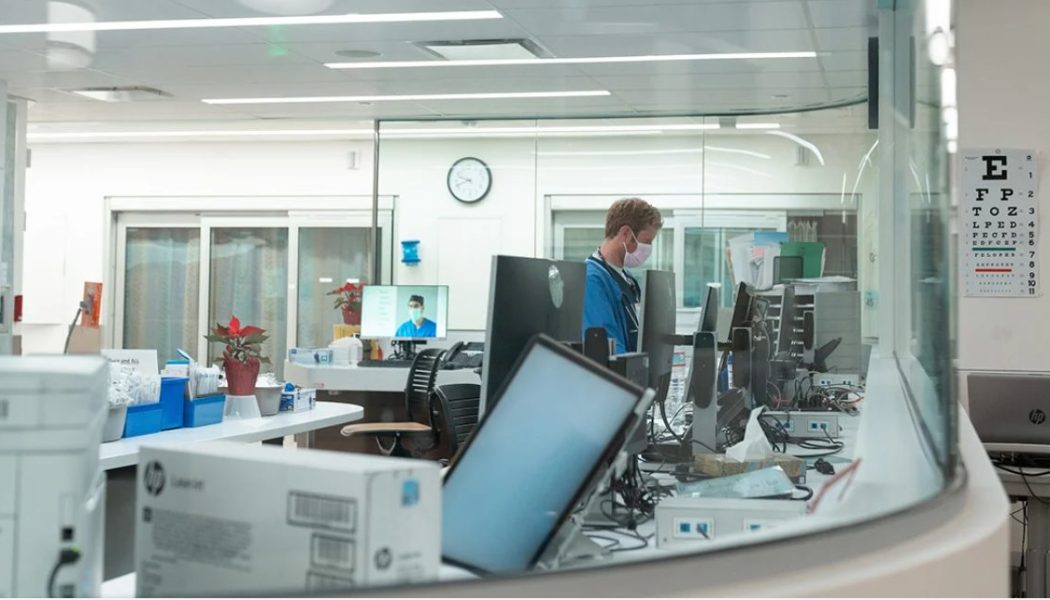

AI helps save lives at UC San Diego Health
UC San Diego Health is on the forefront of integrating artificial intelligence into clinical and operational processes, and it’s beginning to save lives. The health system uses an AI algorithm called COMPOSER to predict sepsis before clinical manifestations, according to a study published in January. Patients who check into the emergency department are continuously monitored for more than 150 variables that could be linked to sepsis, including lab results, vital signs, medications and more. When patients are at risk, the AI algorithm notifies nursing staff through the EHR. “We found early detection of sepsis resulting in 20% drop of mortality in our emergency department patients with sepsis, which is really, really huge and translates to 50 lives saved on an annual basis here a...[Read More]
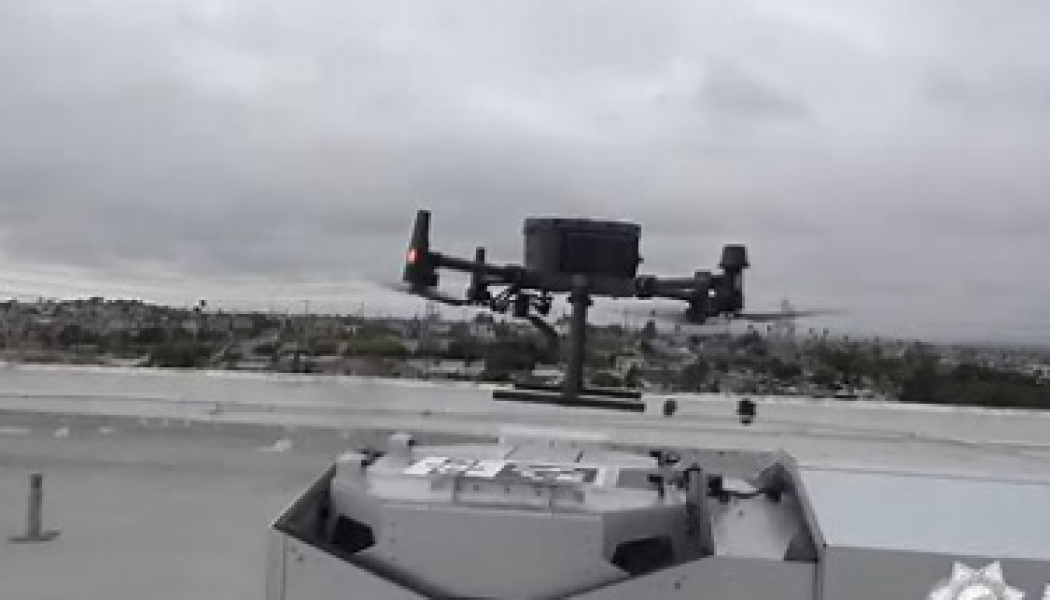

Elk Grove police introduce aerial drones as first responders. How will the program work?
The Elk Grove Police Department plans to add three aerial drones to assist in the line of duty, a trend that many law enforcement agencies have recently adopted to contribute to service. As a part of the Police Department’s Drone as a First Responder (DFR) program, deployed drones will amplify officers’ ability to respond to live 911-operator dispatch calls and send necessary resources to a scene for service, enabling staff to locate, report and track suspects and vehicles involved in ongoing crimes. Keep Reading This Article at the MSN.com
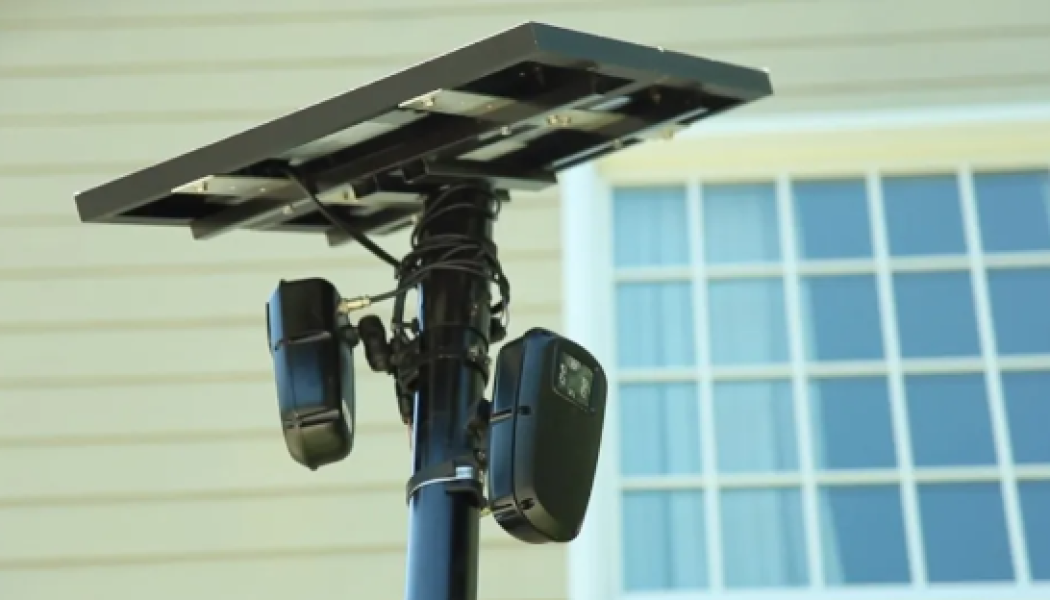

What are ‘Flock’ cameras, and why are hundreds coming to California?
The California Highway Patrol announced its first-ever arrest with the aid of a Flock Safety camera, and suspect identification in the state will likely never be the same. In a news release Friday, the CHP said that the camera aided in the search for a person suspected in a non-fatal shooting on the Bay Bridge, which connects San Francisco and Oakland in the Bay Area. The suspect’s vehicle was captured on a Flock camera near Treasure Island, which sits between the two cities. Keep Reading This Article at the MSN.com


Some Sacramento County residents can use a new online tool to have their traffic tickets reduced
(FOX40.COM) — Sacramento County residents struggling to pay off fines or traffic tickets can now request a reduction for their citations without having to appear in court. Residents can request a reduction from Sacramento Superior Court by using the court’s new online service called MyCitations. Sacramento Superior Court officially launched the online service on Wednesday. The online tool includes an online application that allows individuals facing financial hardship to request a reduction to help pay off their citation, court officials said in a press release. Keep Reading This Article at the MSN.com