
Providence Technology Group


Court of Appeal rules many websites must be coded to let blind people use them
Restaurants, hotels and other businesses that serve the public in California must make their websites accessible to the blind, a state appeals court ruled Tuesday. The 1990 federal law prohibiting discrimination against the disabled in any place of “public accommodation” applies to websites where people can make reservations, said the Second District Court of Appeal in Los Angeles, the first appellate court in California to rule on the issue. It rejected arguments that the law applied only to actions at the restaurant or place of business and not to a website, a position endorsed by a federal appeals court in Philadelphia in 1998 but rejected by other courts. Tuesday’s ruling also rejected a Los Angeles restaurant owner’s contention that it had complied adequately with the law by providing...[Read More]

In Sacramento, civic technology guides progress
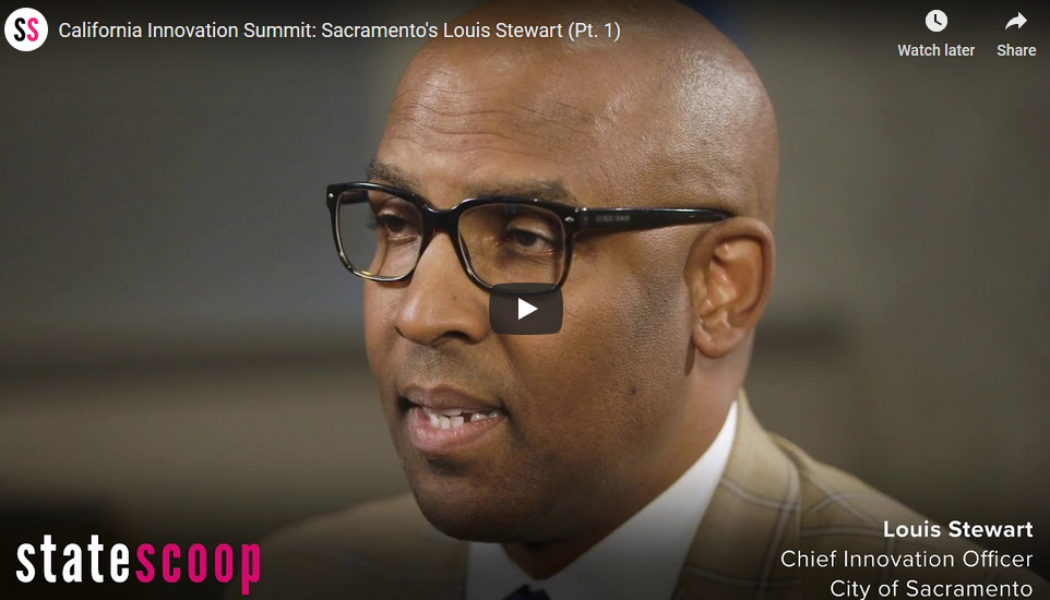
Sacramento has its sights set on becoming a major tech center in Northern California, as it simultaneously seeks to boost quality of life for its residents. Louis Stewart, Sacramento’s chief innovation officer, told StateScoop in a video interview that civic technology and partnerships with local universities and businesses are the keys to achieving those goals via a wide range of initiatives. “Within in innovation and economic development within the city of Sacramento, we’re looking at how do we do civic technology? How do we make sure that there’s evidence-based policy happening?” Stewart said. Within any policy area — whether it’s mobility solutions, environmental sustainability, public health or homelessness — he said that civic tech is the starting point both for encouraging economic ...[Read More]


California clamps down on amateur use of gene-editing technologies
California state officials have passed the first law to prohibit genetic biohacking in an effort to regulate the controversial practice. The new law warns biohackers not to edit their own genes and makes it illegal to sell do-it-yourself genetic engineering kits unless they clearly state that they are not to be used for self-administration. California wants to make it clear that tampering with your own genes is not something that people you should be trying to do “at home.” The advent of the powerful gene-editing tool CRISPR has led to a biohacking movement that has got people interested in tinkering with their own genes for the purpose of self-enhancement. The issue has prompted legislators in California to regulate the practice and last month Governor Gavin Newsom signed a bill authored ...[Read More]


Vote for Greater Sacramento panels for SXSW 2020
Help us highlight the Greater Sacramento region and our innovative solutions to the challenges of the future by voting for our proposed panels at SXSW 2020. This is a can’t-miss opportunity to showcase the region’s value proposition to an international crowd of thought-leaders and pioneers. We submitted three panel proposals that shine light on topics that affect us all, from inclusion to the future of our food system. By voting for one (or all!) of our panel submissions, you can help the region get one step closer to sharing its expertise on a national platform. Learn more about each panel and how to vote: Panel #1: How agtech will save the world by 2050 With a predicted population of 9.8 billion by 2050, we’re going to need to figure out how to feed a much larger population, and fast. Te...[Read More]


No-Code Website Builder Webflow Went From Near Bankruptcy To A $72 Million Series A Funding Round
On his fourth attempt at building the company of his dreams, Webflow CEO Vlad Magdalin made it a point to give every employee a handwritten note ahead of his software company’s annual all-hands retreat. In July, after writing 120 of them, the entrepreneur said it might be time to end the tradition. “My hand is cramping,” Magdalin says. “I may need to find a new plan.” After years of struggle, Webflow is breaking out. In 2012, Magdalin, his brother Sergie and a friend, Bryant Chou, founded Webflow with the promise of providing a better website builder, one that allowed anyone to spin up a professional-caliber website without knowing how to code. Seven years later, Webflow is at the forefront of a wave of specialist startups looking to change how companies build. And with an unusual new $72 ...[Read More]
Aerojet Rocketdyne Cuts Costs, Builds Infrastructure To Compete For Engines On Future ICBM
Last month’s revelation that Boeing may not bid to develop the Air Force’s next-generation intercontinental ballistic missile surprised many. If the company’s concerns about how the program is being competed are not resolved, rival Northrop Grumman may be headed for lucrative monopolies on all three legs of the nation’s nuclear “triad.” The unsettled state of the program, known as the Ground Based Strategic Deterrent (GBSD), doesn’t just impact the big aerospace integrators who want to be prime contractor. It also affects a highly specialized supply chain of domestic contractors whose ranks have thinned dramatically since the end of the Cold War. Foremost among these is Aerojet Rocketdyne, a prospective supplier of solid rocket motors for the three-stage missile. Solid rocket motors are us...[Read More]


Audit Finds 21 California Agencies at High Risk of Cyberattacks
SACRAMENTO, Calif. (CN) – Although protecting personal data and improving information security systems are staples of California’s current legislative session, a new report released Tuesday says over 20 state agencies are hacking risks due to lax IT protocols. Of the 33 agencies surveyed, state auditors pinned 21 as having high-risk security deficiencies. The report says the security flaws could both open residents up to identify theft and hurt the state’s finances. “Given the amount of data the state maintains, the financial cost of a data breach and the damage to its credibility and reputation could be significant,” the audit warns. “The consequences of a data breach highlight the importance of information security in both the public and private sectors.” Keep reading this article at Cou...[Read More]

Forget Postmates And Grub Hub, Sacramento Is Testing Food Delivery Robots
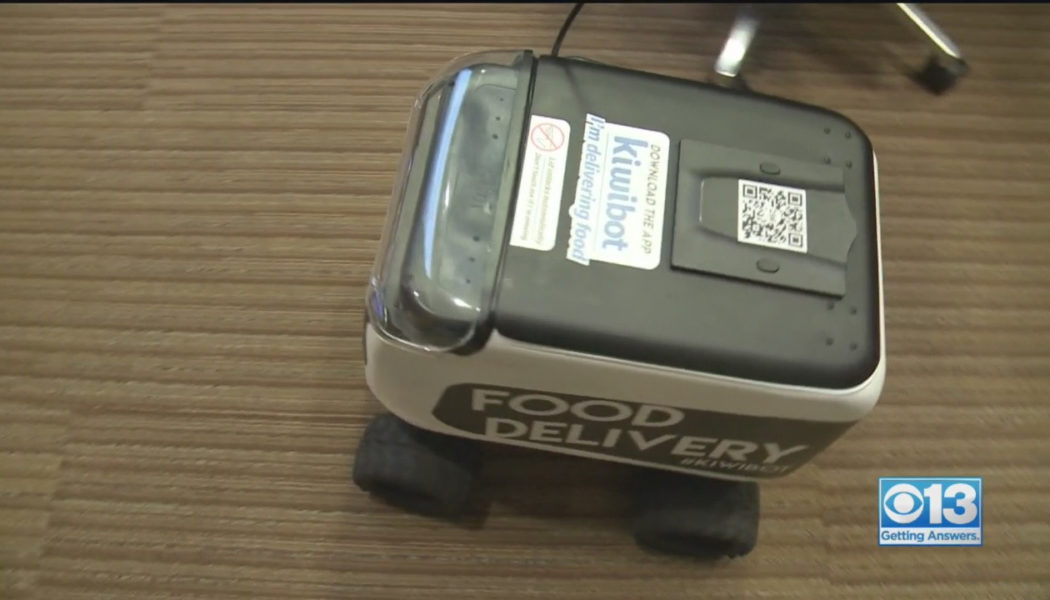
CBS13 got an exclusive look at the robots that could eliminate the need for delivery drivers (and tipping) one day. The four-wheeled robot will soon be the latest way to get food delivered to your doorstep. It’s called the “Kiwibot,” a self-propelled autonomous vehicle with six onboard navigation cameras to avoid hitting objects. It travels on sidewalks but only at approximately three miles an hour to match the average speed of people. Using an app, customers can order their favorite food online and have ti arrive about 35 minutes later. Keep reading this article at CBS Sacramento.


Innovation labs take a gamble to improve city government
In July 2016, San Francisco came together with local nonprofits, several universities, and the federal government to launch a shiny new venture: Superpublic, an innovation lab. At the ribbon-cutting ceremony in the lab’s 5,000 square-foot space in downtown San Francisco, the city’s former mayor Mark Farrell called the project “the future.” But within a year, the lab had shut its doors. Over the past decade, civic innovation incubators like Superpublic have become something of a trend in city government. Though their work can vary widely, their basic goal is to fuse out-of-the-box thinking into government, often by implementing new technology. The labs bring in tech companies or university researchers to spitball ideas with municipal officials and then pilot new projects — like a city-servi...[Read More]


For the sake of California’s future, teach all kids tech
In California, we know the value of technology. Thanks largely to the world’s largest tech companies right in our backyards, California leads the nation in overall economic output. Technology has made our state one of the world’s leading hubs of innovation and creativity, across multiple industries. Yet, when we shift our view from tech’s present to its future, the Golden State’s outlook isn’t so robust. Today, our kids aren’t learning the computer science knowledge and skills they will need to succeed in the future tech-driven workforce. Just three percent of California’s 1.9 million high school students took a computer science course in 2017. This is one of the startling findings of a recent Kapor Center study of K-12 computer science education in California’s schools. The study took a c...[Read More]


Raley’s reins in shrinkage from expired products
West Coast grocer rolls out date check system to all stores Raley’s expects a sizable reduction in product shrinkage with the chainwide deployment of expiration date management software. The West Coast supermarket chain has implemented Date Check Pro from Pinpoint Software Inc. following a successful pilot of the solution in the Sacramento, Calif., area division last spring. Raley’s said it adopted the system after determining that a technology-based solution supporting inventory management would aid ongoing efforts to provide customers with the freshest and highest-quality products. Previously, the West Sacramento-based retailer took a more operational approach to flag out-of-code items by bolstering team member training and auditing processes to best manage disposal of expiring products....[Read More]

Girl Scouts take science outreach on the road in Sacramento region with mobile STEM center
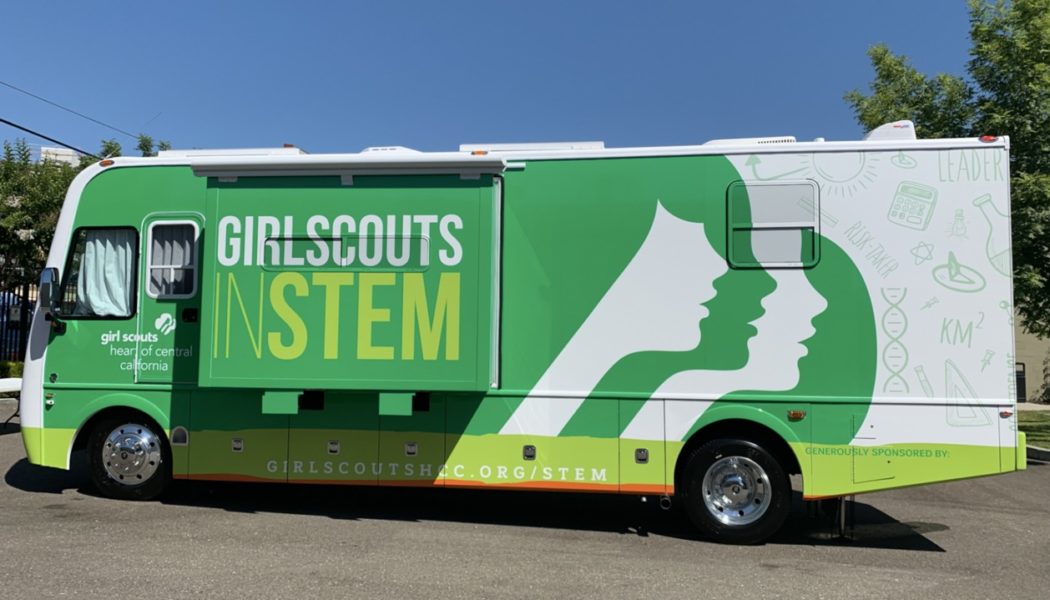
The Girl Scouts are going mobile in the Sacramento region to help close the science and technology gender gap for low-income girls – by rolling out a STEM space in a renovated 30-foot RV. The Girl Scouts Heart of Central California regional council already has two permanent STEM centers in Sacramento and Modesto. Its Sacramento center, which debuted in November 2017, was one of the first Girl Scouts STEM centers to open nationwide. The first year, the two spaces hosted 1,700 girls, according to Beth Peters, manager of STEM initiatives at Girl Scouts. “And already this year, we’ve served 2,100 girls, so we are just growing and amplifying and expanding, and it’s really exciting,” Peters said. Keep reading this article at SacBee.com