
Providence Technology Group


Bees wearing QR codes tracked by AI cameras to help researchers save them in the wild
Scientists are putting button-sized QR codes on hundreds of bees as a way to better understand the insects and help save their declining populations. As pollinators, bees play a critical role in maintaining the health of U.S. agriculture, according to University of Oregon (UO) Associate Professor Lauren Ponisio. Be it coffee, almonds or a number of other crops, bees help ensure that those crop yields remain fruitful. Keep Reading This Article at FoxWeather.com


AI training program fuels an especially lean staff in San Jose, Calif.
This week, San Jose city officials celebrated the graduation of the latest cohort of public employees from its AI Upskilling Program, a 10-week training course designed to help staff use artificial intelligence responsibly and effectively deliver services. Launched last year with San Jose State University, the AI-training program offers customized instruction for projects dealing with topics like infrastructure, transportation, health and human services and education. Keep Reading This Article at StateScoop.com


Drones, AI and Robot Pickers: Meet the Fully Autonomous Farm
In the verdant hills of Washington state’s Palouse region, Andrew Nelson’s tractor hums through the wheat fields on his 7,500-acre farm. Inside the cab, he’s not gripping the steering wheel—he’s on a Zoom call or checking messages. A software engineer and fifth-generation farmer, Nelson, 41, is at the vanguard of a transformation that is changing the way we grow and harvest our food. The tractor isn’t only driving itself; its array of sensors, cameras, and analytic software is also constantly deciding where and when to spray fertilizer or whack weeds. Keep Reading This Article at MSN.com


New AI-driven school in Folsom aims to transform education
FOLSOM, Calif. — A new school opening this fall in Folsom is set to change the traditional classroom dynamics with the use of artificial intelligence (AI). Named Alpha School, this innovative institution aims to tailor education to each student’s individual pace and academic level, offering a modern approach to learning. “Artificial intelligence has enabled us to turn the teacher-in-front-of-the-classroom model on its head. Now kids can be learning at exactly their own pace and their level,” said Mackenzie Price, co-founder of Alpha School. Keep Reading This Article at KCRA.com
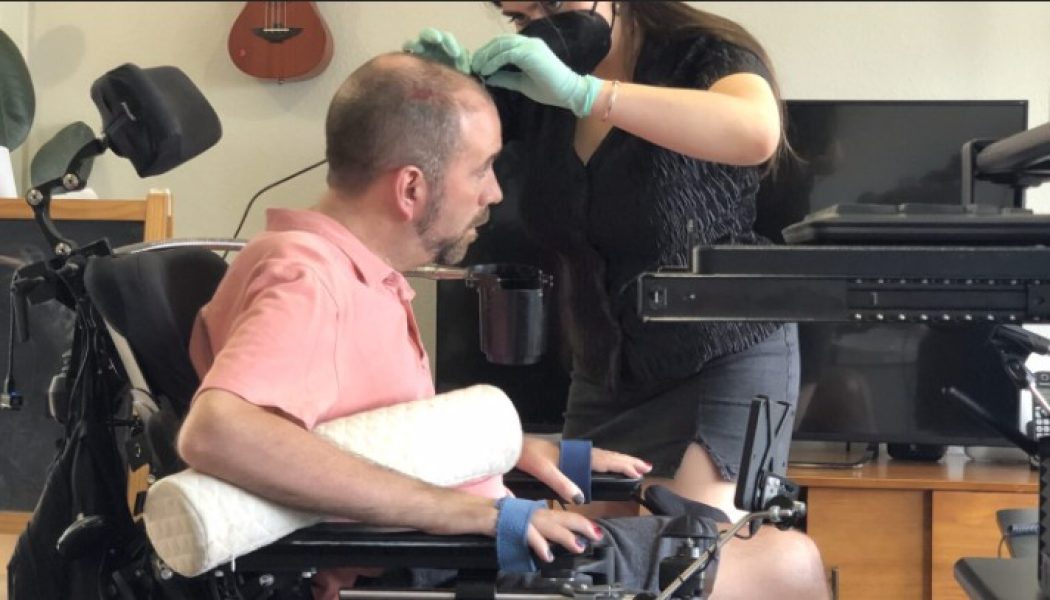

A neural brain implant provides near instantaneous speech
Stephen Hawking, a British physicist and arguably the most famous man suffering from amyotrophic lateral sclerosis (ALS), communicated with the world using a sensor installed in his glasses. That sensor used tiny movements of a single muscle in his cheek to select characters on a screen. Once he typed a full sentence at a rate of roughly one word per minute, the text was synthesized into speech by a DECtalk TC01 synthesizer, which gave him his iconic, robotic voice. Keep Reading This Article at Ars Technica
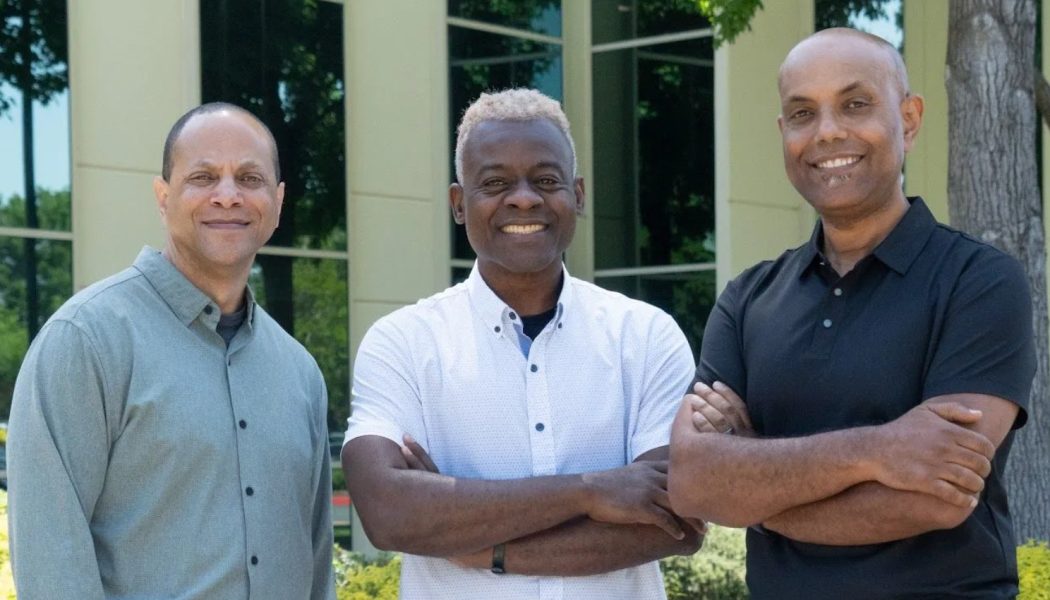

Solidigm: Rancho Cordova’s Quiet Force Powering The AI Revolution
In the heart of Rancho Cordova, a quiet powerhouse is making waves in the global technology landscape. Solidigm, an independent U.S. subsidiary of SK hynix, is rapidly establishing itself as a hidden gem in STEM, specializing in advanced AI storage solutions. The company, famously referred to as a “billion-dollar startup,” was acquired from Intel in 2020. While the public might associate artificial intelligence with flashy apps and digital art, Solidigm’s executives reveal a deeper, more fundamental role in the AI ecosystem: securely and efficiently storing the vast amounts of data that fuel it all. To learn more about the billion-dollar company, technology reporter Christine Shelby visited with with three key executives – Gamil Cain, senior principal software engineer and product security...[Read More]


For AI projects, California’s CIO wants agencies to consider benefit, value, cost
California is approaching the two year anniversary of Gov. Gavin Newsom signing a landmark executive order in September 2023 designed to organize the state’s governance of artificial intelligence technologies. Almost two years on, state Chief Information Officer Liana Bailey-Crimmins says the state’s use of AI is “moving forward” but that she’s encouraging agency heads to think carefully about the solutions they choose. She says she’s encouraging agencies to consider the “benefit, value and cost” of AI products, and to also consider technologies that don’t use AI. Keep Reading This Article at StateScoop


Why Public Pensions Need an AI Academy
No one doubts that an artificial intelligence revolution is coming fast to the world of public pensions, but the first transformative signs in their pension portfolio operations will come from the private sector. Securities analysts, portfolio management companies and pension consultants will use AI tools to become more productive with fewer employees (at least once AI overcomes today’s hallucination stage). Complex data analytics and decision-making models are already being deployed by those on the cutting edge to exploit information advantages that enhance their performance — and eventually their value to pension portfolios. We’re not just talking about “personal information assistants.” Those who complacently expect that AI in their offices will essentially be a search engine on steroid...[Read More]


State claims there’s zero high-risk AI in California government—despite ample evidence to the contrary
California uses algorithms to predict whether incarcerated people will commit crimes again. It has used predictive technology to deny 600,000 people unemployment benefits. Nonetheless, state administrators have concluded that not a single agency uses high-risk forms of automated decisionmaking technology. That’s according to a report the California Department of Technology provided to CalMatters after surveying nearly 200 state entities. The agencies are required by legislation signed into law in 2023 to report annually if they use high-risk automated systems that can make decisions about people’s lives. “High-risk” means any system that can assist or replace human decisionmakers when it comes to encounters with the criminal justice system or whether people get access to housing, educatio...[Read More]


What escaped cuts during tight state budget year? Government IT projects
As lawmakers wade through a sea of budget cuts and make decisions about which state programs to slim down, several government technology projects managed to avoid the chopping block. Meanwhile, Gov. Gavin Newsomhas proposed paring down other initiatives, like Medi-Cal expansion, to plug California’s $12 billion deficit. Keep Reading This Article at MSN.com


Effective AI Requires Effective Data Governance
As part of its artificial intelligence adoption strategy, the University of California, San Diego is leveraging existing data governance practices, but it’s also taking a fresh look at its approach to ensure internal data is properly vetted, used and protected. The university recently built its own suite of generative AI tools, called TritonGPT. One AI assistant being tested will allow staff to use natural language to ask questions and get answers based on institutional data that’s stored in an enterprise data warehouse used for analytics, says Brett Pollak, UC San Diego’s executive director of workplace technology and infrastructure services. Keep Reading This Article at EdTech Magazine


Mental Health and Substance Misuse Treatment Is Increasingly a Video Chat or Phone Call Away
More Californians are talking to their therapists through a video screen or by phone than in person, marking a profound shift in how mental health care is delivered as record-setting numbers seek help. While patients and providers say teletherapy is effective and easier to get than in-person services, experts in the field noted that teletherapy often requires a skilled mental health practitioner trained to pick up subtle communication cues. Almost half of the roughly 4.8 million adults who visited a medical professional for mental health or substance use disorders in 2023 did so exclusively through teletherapy, according to a KFF Health News analysis of the latest data from UCLA’s California Health Interview Survey. Keep Reading This Article at KFF Health News